
Breaking Down Barriers to Healthy Lives
Let’s work together to address obstacles to equitable health and well-being across lower Michigan.
about us2022 - 2025 Impact Report
The Michigan Health Improvement Alliance continues to reaffirm its role as a backbone organization—providing the infrastructure, coordination, and strategic guidance needed to align diverse stakeholders around a shared vision for regional health and prosperity. Learn more in our Impact Report.
Read our Impact Report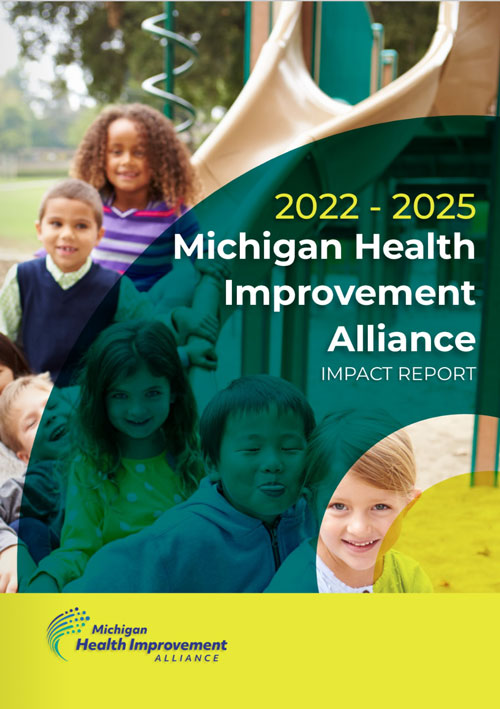

COLLECTIVELY IMPROVING LIVES
Everyone deserves fair and equitable access, opportunities and resources to live their healthiest lives. At the Michigan Health Improvement Alliance, we equip and empower our partners to reimagine and positively influence health outcomes.
Explore how we’re collectively improving lives and communities by reducing health inequities.
Stories of Impact
 read more
Northeast Michigan Regional Food Summit Returns October 21
The Northeast Michigan (NEMI) Healthy Food Initiative, a partner of the Michigan Health Improvement Alliance, is hosting this free one-day event in Hale.
 read more
Michigan Health Improvement Alliance elects five new board members
Five new directors will elevate organization’s commitment to equitable health and well-being across central and eastern Michigan.
 read more
Grants available for child care providers in Bay City
The Bay City Child Care Advisory Board has announced a small grants program for child care providers in Bay City to help expand the amount of child care slots within the city.